
If you’ve started shopping for new flooring, there’s a good chance luxury vinyl plank has come up more than once.
LVP has become a popular option for homeowners who like the look of hardwood but want something that’s easier to maintain and better suited for everyday spills, pets, kids, and busy rooms.
But here’s the part that can get confusing: two LVP floors can look almost identical and still be very different products.
The color may be similar. The wood grain may look similar. Both boxes may even say “waterproof.” But the wear layer, core construction, overall thickness, locking system, warranty, and installation requirements can all be different.
So before choosing luxury vinyl plank flooring based only on the color or price tag, it helps to understand what you’re actually buying.
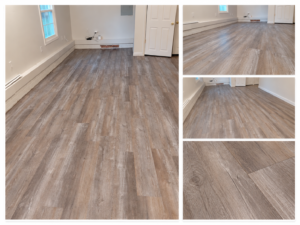
What Exactly Is Luxury Vinyl Plank Flooring?
Luxury vinyl plank, commonly called LVP, is a type of resilient flooring designed primarily to give you the appearance of hardwood in a vinyl-based product.
Most modern LVP is made from several layers.
At the top is a protective surface and wear layer. Under that is the printed design that creates the wood appearance. Beneath the design is the core of the plank, and some products also include an attached backing or pad.
That layered construction is one reason LVP can vary so much from one product to another. The flooring you see on top is only part of the story.
Modern products can also include detailed textures, beveled edges, wider planks, longer boards, and more realistic wood patterns than older generations of vinyl flooring.
Why Has LVP Become So Popular?
For many homeowners, LVP lands in a practical middle ground.
You can get the appearance of wood without some of the maintenance concerns that come with natural hardwood. Many LVP products are designed for areas where spills and everyday messes are expected, and routine cleaning is generally straightforward.
There’s also a wide range of colors and styles available, so LVP can work with everything from traditional interiors to newer, more modern spaces.
It can make sense for living rooms, kitchens, hallways, bedrooms and other areas of the home, depending on the specific product and how the room is used.
But that doesn’t mean every LVP product is right for every house.
Not All LVP Is the Same: What You Should Compare
This is where shopping for LVP gets more interesting.
Instead of asking only, “How much is this per square foot?” look at the specifications behind the floor.
Start With the Wear Layer
The wear layer is the clear protective layer over the printed design.
It helps protect the floor from everyday abrasion, scuffs and wear. It’s usually measured in mils, which is different from millimeters.
You may see products with wear layers such as 6 mil, 12 mil, 20 mil or higher.
A 12-mil product can be perfectly reasonable for many residential applications. A homeowner with large pets, a busy household, heavily used hallways or other demanding areas may want to compare it with a 20-mil option.
But don’t make the mistake of assuming the biggest wear-layer number automatically means you’re looking at the best floor.
The surface finish, core, locking system, warranty, installation and intended use all matter too. Two floors with the same wear layer can still perform differently.
That’s why it’s better to look at the complete product instead of buying based on one number.
Wear Layer and Plank Thickness Are Not the Same Thing
This is an easy specification to misunderstand.
The wear layer protects the design at the surface.
The total plank thickness refers to the thickness of the entire flooring plank.
You might see something like:
6.5 mm total thickness
20 mil wear layer
Those numbers are measuring two completely different things.
A thicker plank can affect things such as the feel of the floor and the construction of the locking system, while the wear layer is specifically related to surface protection.
So if one salesperson tells you a floor is “20 mil” and another says a floor is “6 millimeters,” they aren’t giving you comparable measurements.
Ask for both.
Understand What Type of Core You’re Buying
If you’re looking at rigid-core LVP, you may come across two common terms: SPC and WPC.
SPC generally refers to a dense stone/polymer composite core. It tends to feel firmer underfoot.
WPC uses an expanded or foamed polymer-type core and is generally thicker and somewhat softer or quieter underfoot.
Neither one automatically wins.
The better choice depends on the room, the product, the subfloor, your comfort preferences and what you expect from the floor.
Check Whether There Is an Attached Pad
Some LVP comes with an attached backing or pad.
That can affect sound, comfort and installation requirements.
But don’t assume that adding another layer of underlayment will automatically make the floor better. Some manufacturers limit the type or thickness of additional underlayment that can be installed, and using the wrong product can create problems with the locking system or warranty.
Always follow the requirements for the exact flooring product being installed.
Look at the Installation Method
LVP isn’t installed the same way in every situation.
Some products use a click-lock system and are installed as a floating floor. Others can be glued directly to the prepared subfloor. There are also loose-lay products designed for particular applications.
For a floating floor, the planks connect to each other rather than being permanently attached to the subfloor.
That sounds simple—and LVP is often marketed as DIY-friendly—but the installation still depends heavily on what’s underneath it.
Is LVP Really Waterproof?
This is probably one of the most important things to understand before buying LVP.
You’ll see plenty of luxury vinyl flooring advertised as waterproof, and many modern LVP products do have waterproof cores.
That can make LVP a practical choice for kitchens, bathrooms and other rooms where spills happen.
But “waterproof flooring” should not be interpreted as “water can never cause a problem.”
Water can still travel around the perimeter of a room, through joints, beneath flooring or into the structure underneath it.
In fact, manufacturers of waterproof vinyl flooring specifically point out that the flooring itself may not be considered a moisture barrier. Subfloor moisture still needs to be evaluated and addressed when necessary.
So if a home has a moisture problem, putting waterproof planks on top of it doesn’t automatically solve the problem.
Find the source of the moisture first.
Where Does LVP Work Best?
LVP can work in a lot of residential spaces, which is part of its appeal.
It can be a strong option for a busy family room, kitchen, hallway, bedroom or other space where you want the wood look without the same maintenance routine as natural hardwood.
Homes with pets are another common application because LVP is relatively easy to clean.
That said, “pet-friendly” does not mean scratch-proof.
Pet nails, dragged furniture, abrasive grit and heavy objects can still damage the surface. Manufacturers recommend using furniture protectors, keeping dirt and grit off the floor and taking precautions when moving heavy furniture or appliances.
The right question isn’t simply:
“Is LVP good?”
It’s:
“Is this particular LVP product a good fit for this particular room and household?”
That leads to much better decisions.
What Are the Downsides of LVP Flooring?
LVP has plenty of advantages, but no flooring material is perfect.
One limitation is that you don’t sand and refinish LVP the way you can with traditional hardwood.
Damage also isn’t impossible. Sharp objects, grit, heavy furniture and excessive scratching can affect the surface.
Direct sunlight and excessive heat deserve attention as well. Flooring manufacturers recommend protecting vinyl flooring from prolonged direct sunlight because UV exposure and heat can contribute to fading, discoloration and, in some circumstances, expansion.
Then there’s the appearance.
High-quality LVP can look remarkably realistic, but it is still a manufactured product. If your priority is owning a natural wood floor that can develop character and potentially be refinished years from now, hardwood may still be the better fit.
That’s why flooring should be chosen around the homeowner—not around whichever material happens to be popular at the moment.
Why the Subfloor Matters More Than Most People Realize
Homeowners naturally focus on the flooring they’ll see.
Installers also have to pay attention to the floor you won’t see.
Before LVP goes down, the subfloor generally needs to be clean, flat, dry and structurally sound.
If it isn’t flat enough, problems can show up later in the finished floor. If there’s excessive moisture, that needs to be addressed. Existing flooring may also need removal or preparation depending on its condition and the requirements of the new product.
Shaw, COREtec and CALI all emphasize proper subfloor preparation in their installation guidance.
This is also why the lowest flooring quote isn’t automatically the best deal.
One quote may include necessary preparation. Another may be pricing only the visible installation and leave subfloor work to be discovered later.
Ask what is included.
What About Indoor Air Quality?
This is something more homeowners are asking about, and it’s a reasonable question.
Flooring, adhesives and other building products can emit volatile organic compounds, or VOCs. The U.S. Environmental Protection Agency notes that VOCs can come from products and materials used indoors.
If indoor air quality is important to you, ask about independent emissions certifications for the exact flooring you’re considering.
One certification you may see on hard-surface flooring is FloorScore. The program evaluates flooring and related products for VOC emissions. SCS Global Services says FloorScore testing covers 35 individual VOCs included in the applicable California emissions-testing standard.
Certification shouldn’t be the only reason you choose a floor, but it’s another specification worth understanding instead of relying only on words like “green” or “low VOC” on marketing material.
How Much Maintenance Does LVP Need?
One of LVP’s strengths is that everyday maintenance doesn’t have to be complicated.
Regularly remove dust, dirt and grit. Clean spills promptly. Use a cleaner approved for your particular flooring product.
Protect the floor from furniture legs, avoid dragging heavy objects across it, and use appropriate mats near entrances to reduce the amount of abrasive material tracked indoors.
One thing we strongly recommend: keep the care instructions that come with your flooring.
Don’t assume every viral cleaning tip you see online is safe for vinyl flooring.
Manufacturers differ in the cleaners they approve, and several specifically warn against certain abrasive cleaners, harsh chemicals and other household products.
What Should You Ask Before You Buy LVP?
Before making a final decision, you should be able to answer these questions:
- What is the wear-layer thickness?
- What is the total plank thickness?
- Is the core SPC, WPC or another construction?
- Is there an attached pad?
- Is the product approved for the room where I want to use it?
- What installation method does the manufacturer require?
- What condition does my subfloor need to be in?
- Are there moisture requirements?
- What does the residential warranty actually cover?
- What cleaning products does the manufacturer recommend?
- What happens if one plank becomes damaged?
- Is there an indoor-air-quality certification if that is important to me?
If those questions can’t be answered, keep asking before you buy.
A flooring sample can tell you whether you like the color.
It can’t tell you everything about the floor.
Is Luxury Vinyl Plank Right for Your Home?
For a lot of homeowners, LVP checks the right boxes: attractive wood looks, relatively simple maintenance, water-resistant or waterproof product options, durability and a wide selection of styles.
But there isn’t one LVP product that’s right for everybody.
A quiet guest bedroom doesn’t have the same demands as a busy kitchen. A home with two large dogs has different flooring needs from a home with one or two adults. And a perfectly prepared subfloor is very different from one that has moisture, movement or uneven areas.
That’s why we recommend looking beyond the color and price.
Look at how the floor is built. Think about how the room is actually used. Ask about the wear layer, core, installation requirements and warranty.
And make sure the conditions underneath the flooring are right before the first plank goes down.
If you’re considering luxury vinyl plank flooring and aren’t sure which option makes sense for your home, JAS FloorCoverings & Renovations can help you compare your choices and understand what you’re buying before installation begins.
Visit us at 4207 Summit Ave, Greensboro, NC 27405, or call (336) 285-7971 to talk about your flooring project.